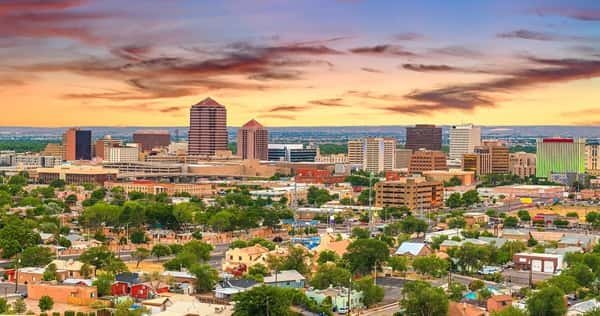
New Mexico is known for adobe architecture, Pueblo cultures, Santa Fe art, red and green chile, the Albuquerque International Balloon Fiesta, Route 66, high-desert landscapes and a distinctive blend of Indigenous, Hispanic and Anglo traditions. Few states have such a recognisable visual identity: earth-coloured buildings, turquoise, wide skies, desert mesas and mountain backdrops appear repeatedly across its cities and rural regions.
The state is best understood as a cultural landscape rather than a collection of isolated attractions. Santa Fe brings centuries of history together with museums and galleries. Albuquerque combines Old Town, Route 66 and ballooning. Northern pueblos maintain living traditions that deserve respectful visitation, while places such as White Sands and Carlsbad Caverns show how varied the natural environment can be. Food is equally important, especially New Mexico chile, which appears in everyday meals rather than only as a tourist novelty.
New Mexico at a Glance
| Detail | Information |
| Location | Southwestern United States |
| Capital | Santa Fe |
| Nickname | The Land of Enchantment |
| Major visitor draws | Santa Fe, Pueblo cultures, chile cuisine, Balloon Fiesta, Route 66, White Sands and desert scenery |
1. Santa Fe and Adobe Architecture
Santa Fe is one of the oldest European-founded cities in the United States and remains New Mexico’s cultural centre. Its low adobe-style buildings, historic plaza, museums and art districts give it a visual identity unlike most American state capitals. The city sits at high elevation, so visitors arriving from lower areas may need an easier first day while adjusting to dry air and thinner atmosphere.
- Santa Fe Plaza: The historic heart of the city and a practical starting point for museums, churches and shopping.
- Canyon Road: Known for galleries housed in adobe buildings and courtyards.
- Architecture: Many modern buildings use Pueblo Revival and Territorial styles, creating continuity between historic and contemporary streetscapes.
2. Pueblo Cultures and Living Indigenous Traditions
New Mexico is home to Pueblo communities whose histories long predate Spanish colonisation. These are living communities, not open-air museums, and visitor access varies by pueblo, ceremony and season. Public feast days and dances can be meaningful experiences when communities welcome visitors, but attendance should never be assumed without checking current guidance.
- Cultural respect: Photography, recording and access rules differ and should always be followed.
- Indian Pueblo Cultural Center, Albuquerque: A useful place to learn broader history before visiting individual communities.
- Art markets: Pottery, jewellery and textiles are best purchased directly from artists or reputable outlets that clearly identify makers.
3. New Mexican Chile and Regional Food
Red and green chile are central to New Mexican cooking. The familiar question ‘red or green?’ refers to sauce choice, while ‘Christmas’ means both. The cuisine also reflects Pueblo, Spanish, Mexican and American influences.
- Hatch Valley: Closely associated with chile growing and seasonal roasting.
- Santa Fe and Albuquerque: Offer everything from traditional family restaurants to contemporary interpretations.
- Other staples: Blue corn, posole, sopaipillas and stacked enchiladas frequently appear alongside chile-based dishes.
4. Albuquerque International Balloon Fiesta
Each October, Albuquerque hosts one of the world’s best-known hot-air balloon gatherings. Mass ascensions fill the sky with hundreds of balloons, while evening glows create a very different spectacle after sunset.
- 2026 dates: The Balloon Fiesta is scheduled for October 3-11, 2026.
- Morning sessions: Early arrival is important because traffic and parking can be significant.
- Weather: Ballooning depends heavily on wind and conditions, so individual events can be delayed or cancelled for safety.
5. Route 66 and Roadside New Mexico
Historic Route 66 crosses New Mexico through communities including Gallup, Albuquerque and Tucumcari, with an older alignment once passing through Santa Fe. Neon signs, motor courts and roadside architecture preserve the era of cross-country automobile travel.
- 2026 centennial: The 100th anniversary of Route 66 has brought renewed attention to historic businesses and road culture.
- Albuquerque: Central Avenue follows a major urban stretch of the historic route.
- Tucumcari: Known for neon, vintage motels and classic Route 66 imagery.
6. White Sands and Desert Landscapes
White Sands National Park protects vast gypsum dunes that create one of the state’s most unusual landscapes. The bright white field changes colour with the sun and can feel almost snow-like despite the desert setting. Wind can also move gypsum across roads and trails, and bright reflected sunlight makes sunglasses and sun protection useful even when temperatures feel mild.
- Dune walking: Distances are deceptive because landmarks can look similar; carry water and follow route guidance.
- Sunset: Lower light creates strong shadows and cooler temperatures, but visitors should note park closing times.
- Missile-range closures: Access can occasionally be interrupted by nearby testing, so check current notices.
7. Carlsbad Caverns and Underground New Mexico
Carlsbad Caverns National Park protects an enormous cave system beneath the Chihuahuan Desert. Its scale makes it more than a typical cave tour, with large chambers, dramatic formations and seasonal bat activity.
- Natural Entrance: A steep walking route descends into the cave for visitors who prefer a more physical approach.
- Elevator access: Provides another route to the main cavern area when operating.
- Reservations: Timed entry arrangements can apply, so current NPS guidance should be checked before travel.
8. Art, Science and High-Desert Landscapes
New Mexico has an unusual mix of fine art, Indigenous art, astronomy, atomic-age history and desert wilderness. This combination is especially visible around Santa Fe, Los Alamos and the central Rio Grande valley. This mix of creativity and science is one reason New Mexico can satisfy very different interests within the same road trip rather than forcing visitors to choose one theme.
- Georgia O’Keeffe Museum: Connects one of America’s best-known artists with the landscapes that influenced her work.
- Los Alamos: Museums interpret the Manhattan Project and the scientific community that developed around the laboratory.
- Dark skies: Rural New Mexico is excellent for stargazing, with high elevation and dry air improving visibility in many areas.
Frequently Asked Questions
Q. What does “red or green?” mean in New Mexico restaurants?
It usually asks whether you want red chile sauce or green chile sauce. Ordering ‘Christmas’ generally means a combination of both.
Q. Can visitors freely enter Pueblo communities?
No. Each pueblo sets its own access, photography and event rules, and some areas or ceremonies may be closed to outsiders. Check official community guidance and respect posted restrictions.
Q. How early should I plan for the Balloon Fiesta?
Accommodation can fill months ahead for popular dates. Morning events also require very early starts because traffic and parking build before sunrise.
Q. Is New Mexico always hot?
No. Elevation changes climate dramatically. Santa Fe and mountain areas can be cold and snowy in winter, while desert areas are much warmer. Even summer nights can feel cool at higher elevations.
Q. Can I combine White Sands and Carlsbad Caverns in one day?
The drive is substantial and both parks deserve time. An overnight route in southern New Mexico is more comfortable than trying to rush through both major sites in a single day.