South Dakota is known for Mount Rushmore, the Black Hills, Badlands National Park, dramatic cave systems, bison and a deep Native American history that long predates its roadside landmarks. Western South Dakota contains most of the famous visitor attractions, while the Missouri River and open prairie shape the central and eastern parts of the state.
A first trip usually works best as a Black Hills and Badlands road trip rather than a statewide race. Distances can be large, wildlife frequently crosses roads, and several places deserve more time than a quick photo stop.
South Dakota at a Glance
| Detail | Information |
| Location | Great Plains region of the north-central United States |
| Capital | Pierre |
| Nickname | The Mount Rushmore State |
| Major visitor draws | Mount Rushmore, Badlands, Black Hills, Native American culture, wildlife, caves and pioneer history |
1. Mount Rushmore National Memorial
Mount Rushmore is South Dakota’s most recognizable landmark, with the faces of four U.S. presidents carved into granite in the Black Hills. The memorial is both a major engineering achievement and a site connected to wider debates about U.S. expansion and Lakota homelands. The site lies within the Black Hills, land that remains sacred to the Lakota and was taken by the United States despite treaty protections, an important part of the memorial’s context.
- Presidential Trail: Provides closer views of the sculpture and interpretive stops below the mountain.
- Visitor center exhibits: Explain the carving process and the people involved in the project.
- Historical context: A fuller visit also considers the Black Hills’ long cultural importance to the Lakota and other Indigenous peoples.
2. Badlands National Park
Badlands National Park protects a striking landscape of eroded buttes, pinnacles and mixed-grass prairie. The exposed geology creates bands of color and fossil-rich formations that look very different from the forested Black Hills nearby. Fossil exhibits help explain that the Badlands preserve evidence of ancient ecosystems very different from the dry prairie seen today.
- Badlands Loop Road: Offers frequent overlooks and short walks suitable for visitors with limited time.
- Wildlife: Bison, bighorn sheep and prairie dogs may be seen, but should always be viewed from a safe distance.
- Heat and storms: Summer weather can be extreme, with little shade on many trails.
3. The Black Hills and Scenic Drives
The Black Hills rise abruptly from the surrounding plains and contain forests, lakes, granite formations and some of the state’s best scenic roads. The region can easily fill several days without repeating the same kind of landscape. Driving loops such as Iron Mountain Road are attractions themselves, with tunnels and viewpoints designed around the surrounding granite landscape.
- Needles Highway: Known for narrow granite tunnels, sharp turns and needle-like rock formations.
- Spearfish Canyon: A scenic drive with limestone cliffs, waterfalls and fall color.
- Custer State Park: Combines mountain drives, wildlife viewing, lakes and hiking within one large park.
4. Native American Culture and Lakota History
South Dakota is home to several tribal nations, and Native history is essential to understanding the state. Public culture includes powwows, museums, art, language revitalization and sites connected with difficult chapters of U.S. history. Several tribal museums and cultural centers provide perspectives that are often missing from older frontier-focused tourism narratives.
- Crazy Horse Memorial: A privately operated mountain carving and cultural complex focused on Native American heritage.
- Pine Ridge and other reservations: Visitors should follow local guidance and remember these are living communities, not tourist exhibits.
- Wounded Knee history: Requires respectful context because of the 1890 massacre and its continuing significance.
5. Caves Beneath the Black Hills
South Dakota’s Black Hills contain major cave systems that add an underground dimension to the state’s outdoor attractions. Guided tours reveal delicate formations, unusual minerals and the geology hidden beneath the forested surface. Surface trails above the caves also reveal prairie and wildlife habitats, so the underground tour need not be the only reason to stop.
- Wind Cave National Park: Known for its extensive cave network and rare boxwork formations, with prairie and wildlife above ground.
- Jewel Cave National Monument: Protects one of the world’s longest known cave systems.
- Tour planning: Cave temperatures are cool year-round, and popular tours can fill, so check current schedules in advance.
6. Bison and Wildlife Viewing
Large herds of bison are closely associated with western South Dakota, especially in Custer State Park and protected prairie landscapes. Pronghorn, elk, bighorn sheep and prairie dogs add to the wildlife experience. Bison traffic jams are common enough that travelers should avoid setting a tight schedule for wildlife drives.
- Wildlife Loop Road: A well-known drive through Custer State Park where bison and pronghorn may be seen.
- Do not approach bison: They can move quickly and are dangerous at close range, even when they appear calm.
- Dawn and dusk: Often provide good wildlife activity but also require extra caution while driving.
7. Deadwood, Gold Rush and Western History
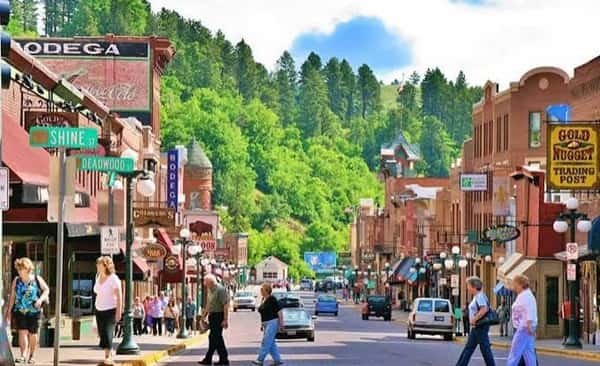
The 1870s Black Hills gold rush brought miners, railways and frontier towns, often in violation of treaties with Native nations. Deadwood became the best-known settlement and still trades on its Wild West history.
- Deadwood: Preserves historic buildings, museums and stories associated with figures such as Wild Bill Hickok and Calamity Jane.
- Lead: Home to the Sanford Lab area and a mining history tied to the Homestake operation.
- Historic interpretation: Look beyond legends to understand the economic and Indigenous history behind the gold rush.
8. Prairie, the Missouri River and Pioneer Stories
Eastern and central South Dakota are less mountainous but remain important to the state’s identity. Prairie agriculture, the Missouri River and pioneer history shape communities far from the Black Hills.
- Pierre: One of America’s smaller state capitals, located along the Missouri River.
- De Smet: Associated with author Laura Ingalls Wilder and the prairie experiences described in her books.
- Missouri River: Supports boating, fishing and wide-open reservoir landscapes across central South Dakota.
Frequently Asked Questions
Q. How many days do I need for Mount Rushmore and the Black Hills?
Three to five days allows time for Mount Rushmore, Custer State Park, at least one scenic drive and either Badlands or a cave tour. A single day is possible but misses much of what makes the region special.
Q. Can I see Mount Rushmore and Badlands National Park in one day?
Yes, but it becomes a long sightseeing day. Staying overnight in the Black Hills or near the Badlands gives you more flexibility and better light for scenery.
Q. Is Custer State Park worth visiting if I already saw the national parks?
Yes. Its wildlife drives, lakes and granite scenery are different from both Mount Rushmore and the Badlands, and many visitors consider it a highlight of the region.
Q. What should I know about driving near bison?
Stay in your vehicle when animals are close to the road, never block or pressure them, and keep a large distance. Bison are fast, powerful and unpredictable.
Q. Is South Dakota mainly a summer destination?
Summer has the widest access, but spring and autumn can bring fewer crowds and good scenery. Winter travel is possible, though mountain roads, attractions and services may operate on reduced schedules.