Alaska is known for enormous wilderness, glaciers, Denali, bears, whales, the northern lights, long summer daylight and Alaska Native cultures. It is the largest U.S. state by area, and its scale changes the way people travel: many communities are not connected by road, and boats, small aircraft and the Alaska Railroad can be as important as cars.
The best Alaska trip starts by choosing a region and a season. Southeast offers fjords, rainforests and cruise ports; Southcentral combines Anchorage with coastal wilderness; the Interior brings Denali and Fairbanks; and the Arctic offers a very different environment again. Trying to ‘see Alaska’ in one short visit is unrealistic.
| Detail | Information |
| Location | Far northwestern North America, separated from the contiguous United States by Canada |
| Capital | Juneau |
| Nickname | The Last Frontier |
| Major visitor draws | Glaciers, Denali, wildlife, Alaska Native cultures, northern lights, fjords, cruises and vast wilderness |
1. Denali and the Alaska Range
Denali, the highest mountain in North America, is Alaska’s most famous peak and the centerpiece of Denali National Park and Preserve. The surrounding landscape of tundra, braided rivers and mountains is as important as the summit itself. Denali’s immense vertical relief means the mountain can create its own weather, which is one reason clear views are never guaranteed even on otherwise pleasant days.
- Denali National Park: Known for wildlife, long views and a road system with access rules that change according to season and conditions.
- Wildlife: Moose, caribou, grizzly bears and Dall sheep may be seen, though sightings are never guaranteed.
- Weather: Clouds can hide Denali for long periods, so build flexibility into any mountain-viewing plan.
2. Glaciers, Fjords and Icefields
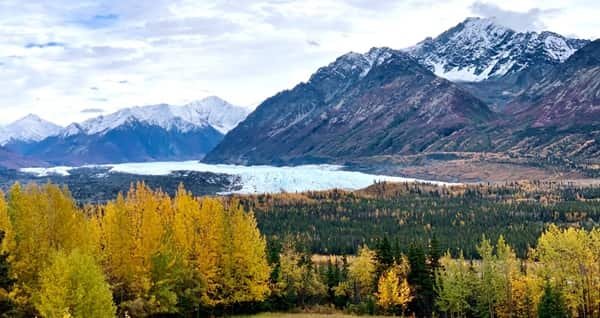
Glaciers shape much of Alaska’s scenery, from roadside ice near Anchorage to tidewater glaciers that meet the sea in deep fjords. Boat tours and flightseeing can reveal scale that is difficult to understand from land alone. Glacier viewing also shows climate change in visible form, with many glaciers retreating and landscapes evolving over relatively short human timescales.
- Kenai Fjords: Offers glacier and marine-wildlife cruises from Seward into a dramatic coastal national park.
- Glacier Bay: A major Southeast Alaska destination known for tidewater glaciers, mountains and marine ecosystems.
- Matanuska Glacier: Provides one of the more accessible large-glacier experiences by road from Southcentral Alaska.
3. Wildlife on Land and Sea
Alaska’s wildlife is one of its greatest draws, but the state is not a zoo and sightings depend on habitat, season and luck. Responsible tours emphasize distance and avoid disturbing feeding, nesting or resting animals. Binoculars and telephoto lenses are better tools than getting closer, particularly around bears and moose that can react quickly to human presence.
- Bears: Brown and black bears live across large parts of the state; viewing areas and guided trips can reduce risk while improving sightings.
- Whales: Humpbacks, orcas and other marine mammals are often seen on coastal cruises.
- Caribou and moose: Common symbols of the Interior and northern regions, though drivers must also watch for animals on roads.
4. Northern Lights and Winter Darkness
Alaska’s position beneath the auroral oval makes it one of the world’s best-known northern-lights destinations. Dark skies are essential, so aurora travel belongs mainly to the colder, darker part of the year rather than the bright summer season. Winter aurora trips require serious cold-weather clothing because the clearest nights are often the coldest and viewing involves long periods outdoors.
- Fairbanks: A major base for aurora tours because of its Interior location, dark skies and visitor infrastructure.
- Season: Late August through late April generally provides enough darkness for aurora viewing.
- Patience: Cloud cover and solar activity vary, so several nights improve the chance of seeing a strong display.
5. Alaska Native Cultures and Living Traditions
Alaska is home to many distinct Indigenous peoples with different languages, homelands and cultural traditions. Inupiat, Yup’ik, Dena, Tlingit, Haida, Tsimshian, Unangax and other communities cannot be reduced to a single ‘Native Alaska’ culture. Community-run cultural programs are especially valuable because they place art and history within present-day Indigenous life rather than treating them as artifacts of the past.
- Cultural centers: Anchorage, Fairbanks and regional communities have museums and heritage centers with Native-led interpretation.
- Art and craft: Carving, weaving, beadwork, dance and storytelling vary strongly by region and community.
- Respectful travel: Follow local guidance, ask before photographing people or ceremonies and support Indigenous-owned tourism where possible.
6. Cruises and the Inside Passage
Southeast Alaska is a maritime region of islands, fjords, temperate rainforest and communities that often have no road connection to the rest of the state. Cruises are a common introduction, but ferries and independent stays provide a slower alternative. Independent travelers can also use the Alaska Marine Highway on selected routes, though schedules require more advance planning than a typical road trip.
- Juneau: The state capital is reachable by air or sea, not by road from the rest of Alaska.
- Ketchikan: Known for Southeast Alaska culture, fishing, rainforest and cruise traffic.
- Sitka: Combines Tlingit history, Russian colonial heritage and dramatic coastal scenery.
7. Gold Rush History and Frontier Towns
Gold rushes transformed Alaska in the late nineteenth and early twentieth centuries, bringing rapid migration, boomtowns and new transport routes while disrupting Indigenous lands and economies. Remnants of that era remain visible in several visitor destinations.
- Skagway: Preserves gold-rush architecture and connections to the Klondike route.
- Fairbanks: Grew from Interior gold discoveries and remains a center for northern Alaska travel.
- Historic rail routes: The White Pass and Yukon Route is closely associated with the Klondike story.
8. Midnight Sun, Remote Travel and Scale
Summer brings extraordinarily long daylight, giving visitors more time for hiking, wildlife tours and scenic travel. At the same time, Alaska’s size means journeys that look simple on a map may require flights, ferries or full days of driving.
- Midnight sun: Northern communities experience the most extreme summer daylight, while even Anchorage has very long days.
- Alaska Railroad: Connects key Southcentral and Interior destinations along a scenic route.
- Plan regionally: Anchorage, Denali and Seward can form one practical trip; Southeast Alaska usually requires a separate transport plan.
Frequently Asked Questions
Q. Can I see Alaska without taking a cruise?
Absolutely. Road trips, the Alaska Railroad, ferries and flights can combine Anchorage, Seward, Denali, Fairbanks and other regions. Cruises are most useful for the Inside Passage, not the only way to experience the state.
Q. When is the best time to see the northern lights?
Dark nights from late August through late April provide the main viewing season. Fairbanks and other Interior locations are popular because they often have clearer skies and long winter darkness.
Q. Do I need a rental car in Alaska?
It depends on the route. A car is useful around Anchorage and road-connected areas, but many famous destinations require trains, boats or flights. Build transport around the exact region rather than assuming the whole state is drivable.
Q. How many days should I allow for a first Alaska trip?
Seven to ten days is a useful minimum for one region, such as Anchorage, Seward and Denali. Longer trips allow slower wildlife viewing and reduce the risk that weather disrupts your only chance at a major activity.
Q. Is wildlife viewing safe?
It can be when proper distances and local guidance are followed. Never approach bears, moose or marine mammals for photos, secure food in bear country and use reputable operators for specialized viewing trips.